 MileCheck
How do you charge an electric car at a public charger?
Charging an electric car at a public charger is different from filling a car with gas. You need a charger with the right plug. You may also need a phone app or payment card. Here is how to find a charger, start charging, pay and leave when you are done.
How do you find a public charger that works with your car?
First, check which charging plug your car uses. You can find this in the car's owner's manual. If you are renting an electric car, ask the rental company which plugs it can use.
There are two main kinds of public charging. Level 2 is slower. DC fast charging is faster and is often found along highways. The plugs are not all the same.
| Plug | Used for | Cars |
|---|---|---|
| J1772 | Level 2 charging | Many electric cars. Some need an adapter. |
| CCS | DC fast charging | Many cars with CCS charging ports. |
| NACS (J3400) | Level 2 and DC fast charging | Tesla and other cars with NACS ports. |
| CHAdeMO | DC fast charging | Some older cars, including older Nissan LEAF models. |
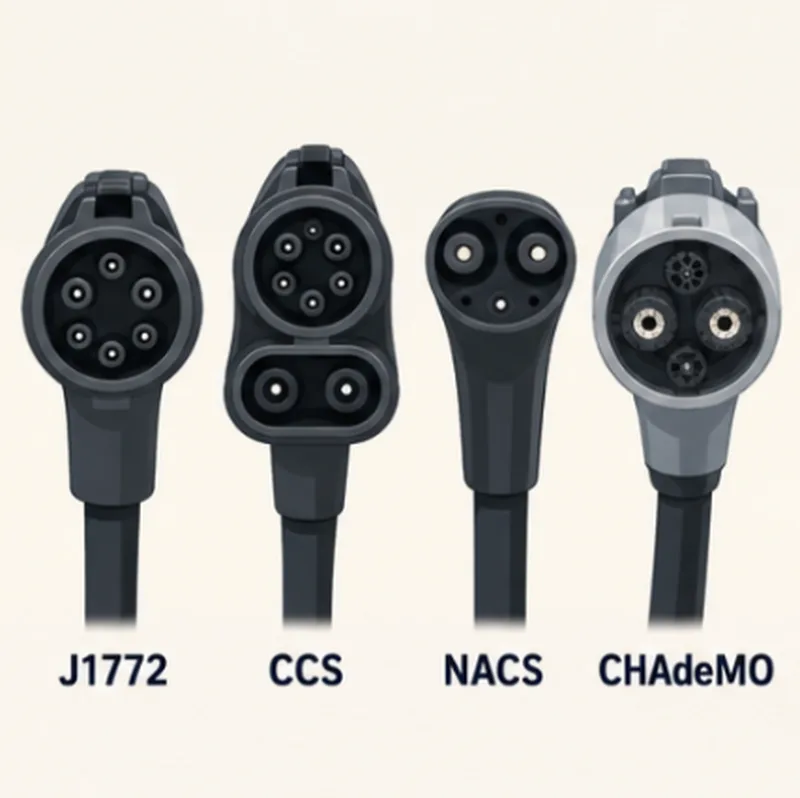
Some cars can use an adapter to connect to another plug type. But not every adapter works with every car or charger. Use only an adapter approved for your car and charging type.
You can find public charging locations using the MileCheck EV charger page or the U.S. Department of Energy's station locator. Check the plug type before you drive there.
How do you charge an electric car at a public fast charger?
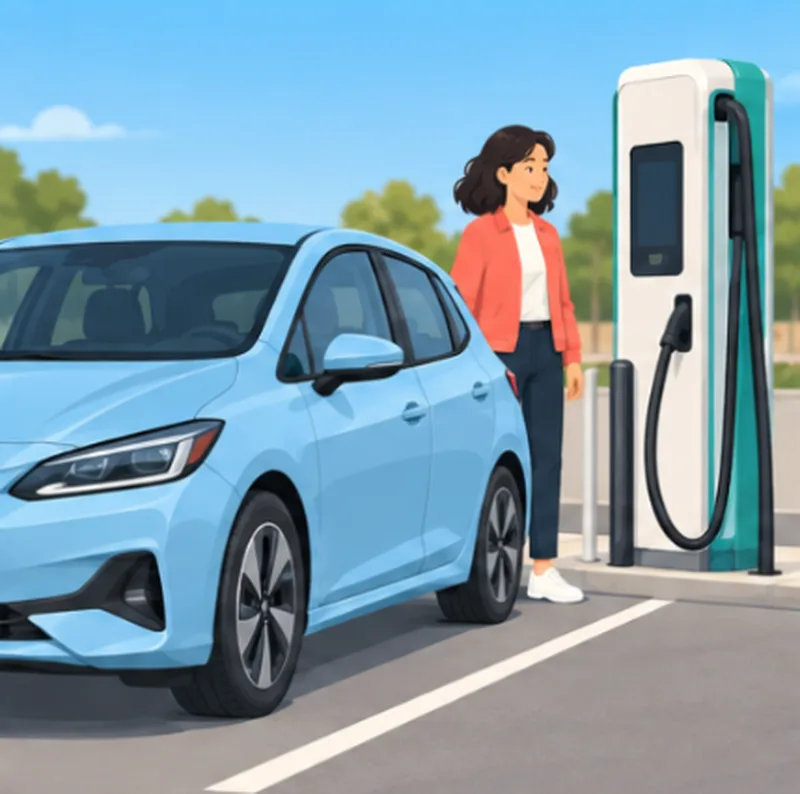
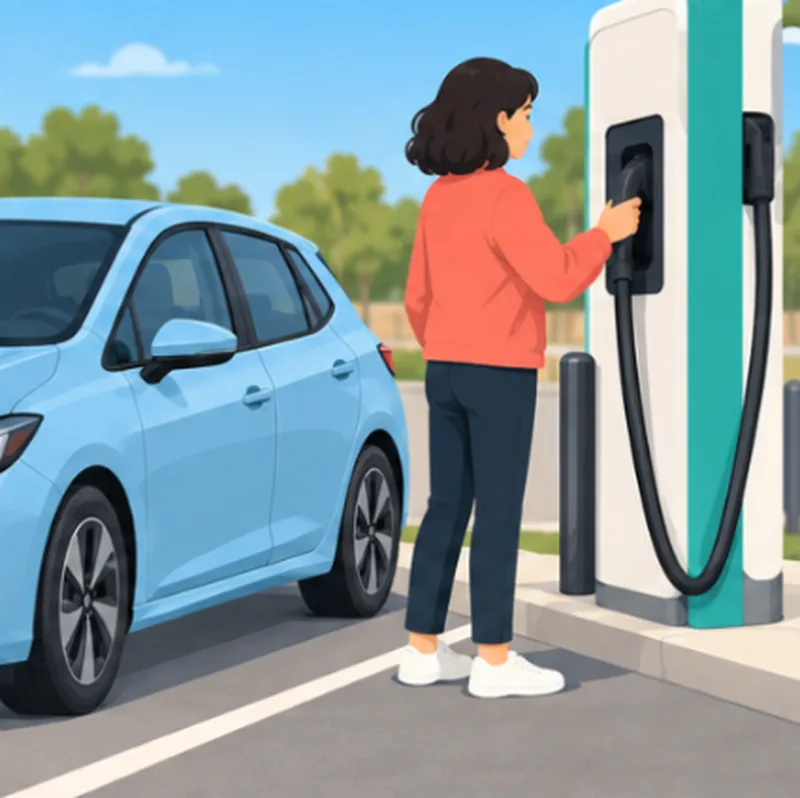
Step 1. Park next to the charger. Find an open charging space. Park so the charging cable can reach your car's charging port. Put the car in Park and turn it off if your owner's manual tells you to.
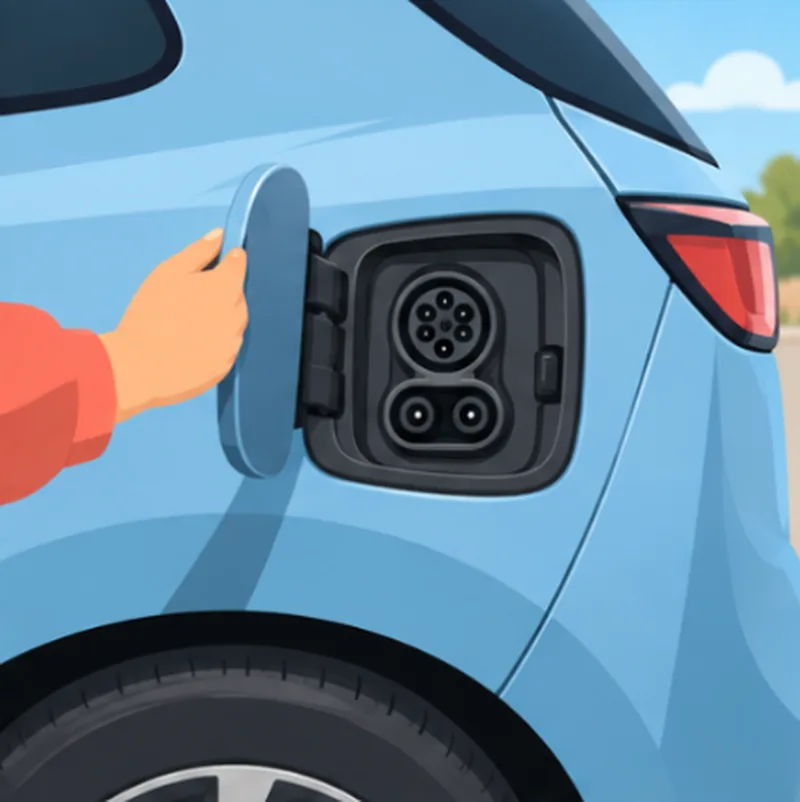
Step 2. Open the charging port. Look for a small door on the front, side or back of the car. Open it. Some cars have a button inside the car. Others let you press the charging door.
Step 3. Start your charging session. Read the instructions on the charger screen. Depending on the station, you may be able to:
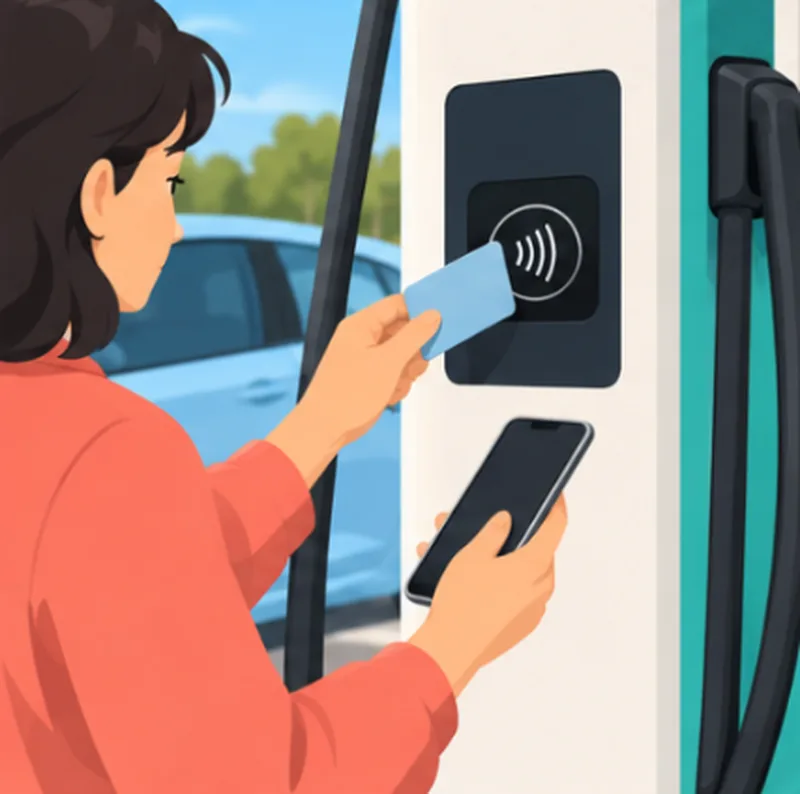
- Use the charging company's phone app.
- Pay with a credit or debit card.
- Tap your card or phone if contactless payment is offered.
Some cars can start charging and handle payment when you plug in. Some stations ask you to plug in before you pay. Follow the instructions on the screen.
Step 4. Plug in the cable. Take the charging plug from the station. Line it up with your car's charging port. Push it in firmly until it is fully connected. Do not force a plug that does not fit.
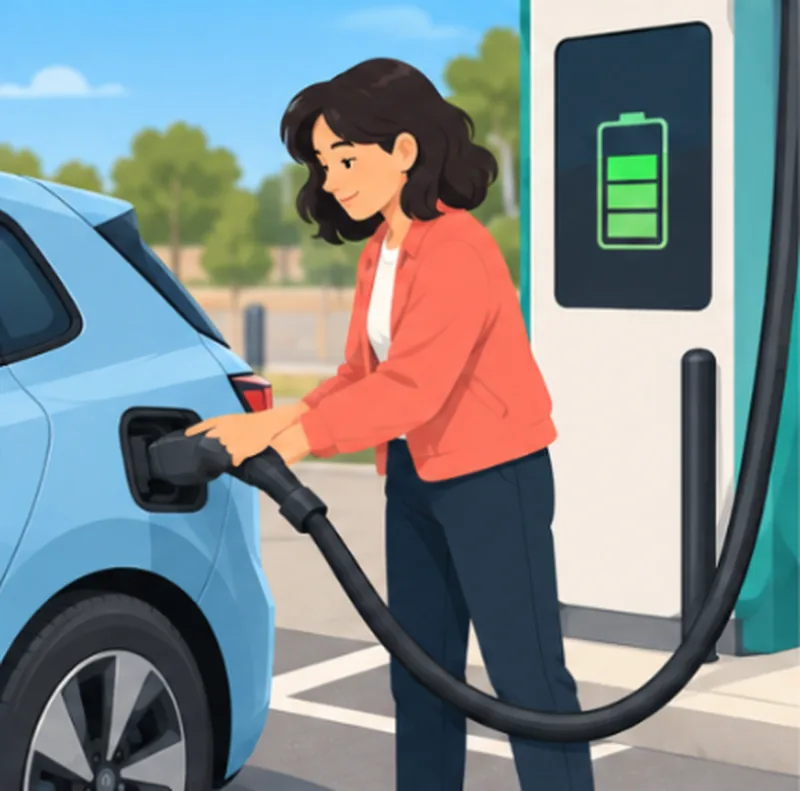
Step 5. Check that charging has started. Look at the charger screen or your car's display. It should show that the battery is charging. You may see a battery picture, a percentage or the amount of power going into the car. If charging does not start, follow the instructions on the screen.
Step 6. Stop charging. Charging can stop on its own when your car reaches its set charge limit. You can also end the session early using the charger, app or car controls. Follow your car's instructions before removing the cable.
Step 7. Unplug and move your car. Release the plug if it is locked. Pull it straight out. Put the cable back on the charger. Close your car's charging door. Move your car out of the charging space so someone else can use it.
How long does it take to charge an electric car?
Charging time depends on the car, battery, charger and battery temperature. The U.S. Department of Energy gives these approximate speeds:
- Level 2 charging adds about 25 miles of driving range in one hour.
- DC fast charging adds about 100 to 200 or more miles of range in 30 minutes.
These are estimates, not guaranteed speeds. Your car may charge more slowly.
Fast charging usually slows down when the battery reaches about 80%. Charging from 80% to 100% can take much longer. For a shorter stop, you can often stop near 80% if you have enough range for your next drive.
How much does it cost to charge an electric car in public?
Public charging prices vary by station. Some stations charge for each kilowatt-hour (kWh) of electricity. Others charge by the minute, by the charging session or through a subscription.
Check the price on the charger screen or in the charging company's app before you begin. Some locations also charge parking fees.
Some stations charge an idle fee if you leave your car connected after charging ends. Busy stations may also have extra fees when the battery reaches a set level. Check the station's rules and move your car when you finish.
For more about prices, see how much EV charging costs.
What are the rules for using a public EV charger?
- Use a charging space only when you are charging.
- Do not unplug another person's car.
- Put the charging cable back when you finish.
- Do not block another charging space.
- Move your car when charging is done.
- Follow any posted time limits or parking rules.
If you have trouble, look for a help phone number on the charging station. You can also check your car's owner's manual for instructions on using and releasing the charging plug.
Sources
- U.S. Department of Energy, Electric Vehicle Charging Stations. Plug types and charging speeds.
- U.S. Department of Energy, Charging Infrastructure Operation and Maintenance. Payment methods and pricing.
- U.S. Department of Energy, Electric Vehicle Charging Networks. Apps and charging sessions.
- SAE International, J3400 North American Charging System standard.
- Kia Owners, Kia Charge Pass. Charging fees and charging above 80%.
- Tesla Model 3 Owner's Manual, Charging Instructions. Connecting, stopping and unplugging.
- Nissan, 2024 LEAF Owner's Manual. CHAdeMO charging.